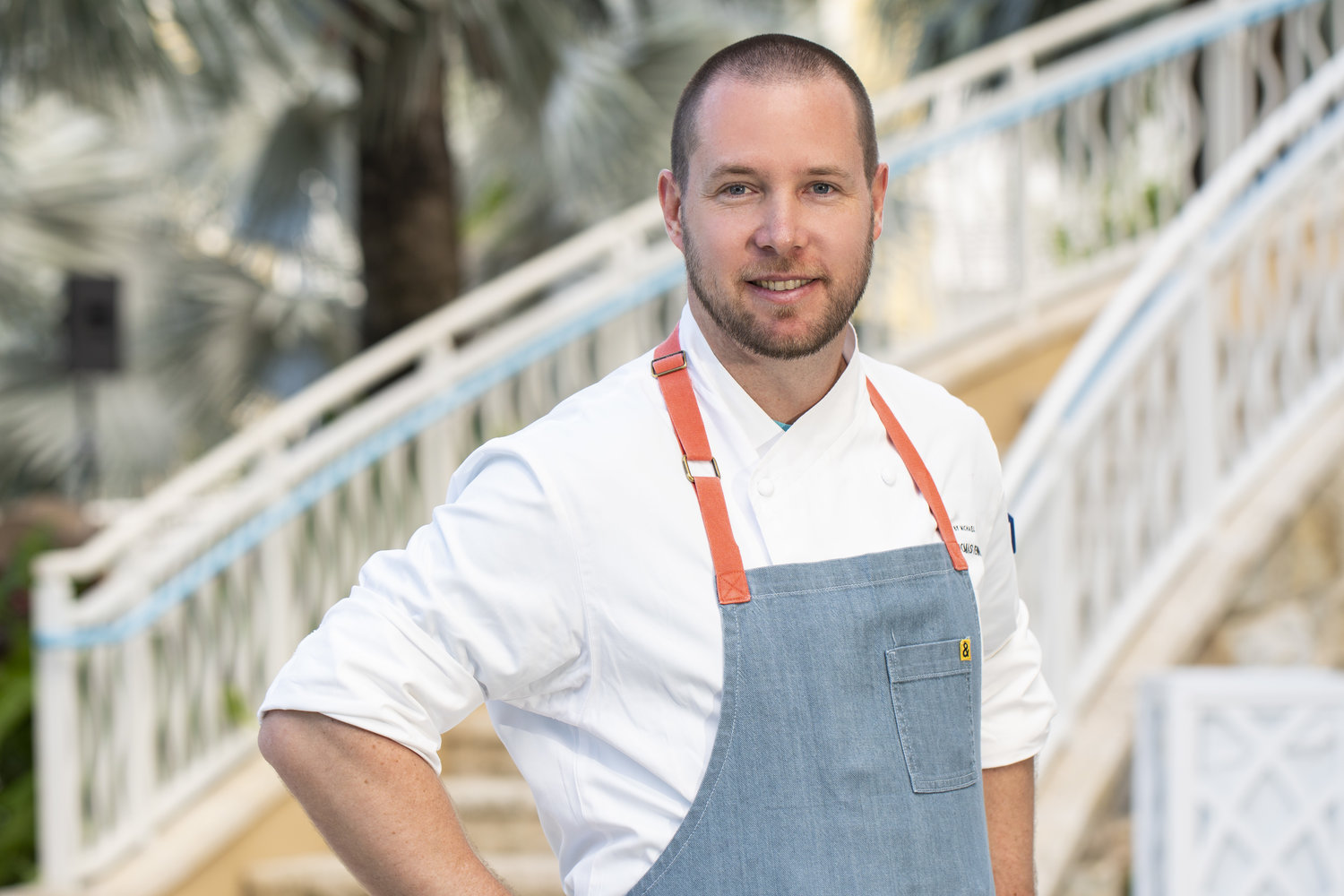
Every plate tells a story. Appearing as a Caboose guest chef this month, Chef Thomas Tennant discusses sustainability, cherished food memories and the importance of preserving local flavours for the next generation of Caymanian chefs. He says scotch bonnet is one ingredient he could never cook without, breadfruit deserves more recognition, conch stew is a true representation of Cayman, and describes the local cuisine as “warm and welcoming.”
Your cooking is deeply rooted in Cayman. When you create a new dish, what story are you hoping to tell through the food?
Every dish I create is a way of telling the story of my time and experience in various kitchens. One very important part of that story is the ingredients that are being used in the dish. I want diners to not just taste the flavours, but also have a sense that the dish they are having was grown, caught, harvested and treated with care with hard work. The food is a conversation between the diner themselves and the people who have participated in its development along the way. Cayman culture, like many other cultures, has its own rhythm and way of telling its story on how each dish was created and its many storytellers of food.
Many people know the traditional flavours of Cayman, but how do you honour those traditions while still surprising diners with something new?
Tradition is my anchor. I start with flavours that many would know in Cayman, like coconuts, scotch bonnets, cassava, breadfruit, fish straight from the sea, and I ask myself how to elevate them without losing their soul. Sometimes it’s technique, sometimes its pairing with other cuisines, sometimes is simply restraint. The surprise should never overshadow the heritage, it should deepen it.
The Caboose Summer Series celebrates local ingredients. Which Cayman ingredient do you think deserves more recognition, and why?
Breadfruit. Though I may not be using it right now for this portion, I find that it’s a versatile ingredient that is also humble. It can be roasted, mashed, smoked, buttered, grilled, it will adapt to almost anything. Breadfruit itself as an ingredient to Caymanians a symbol of resourcefulness and community and it deserves to be recognised as a hero.
“Having a breadfruit tree in the yard is synonymous to being prepared and welcoming.”
Every chef has a defining moment. Was there an experience, mentor or meal that shaped the chef you’ve become today?
My defining moment wasn’t one dish, it was always gravitating to what truly spoke to me and just paying attention. One of the defining moments to me was my family’s gathers when we had homemade Gnocchi Bolognese. Warm and comforting, it was also the hospitality in the effort in preparing not only the food but in the importance of gathering. What I took from those meals was that good food was made from loving effort and genuine hospitality was in every step. Later, working with chefs who valued authenticity over trends reinforced those values which carries in to not only the food I produce but in the education to others and stories I tell.
If someone was tasting Cayman cuisine for the very first time, what flavours or emotions would you want them to leave with?
Warmth, comfort and genuine hospitality. Cayman cuisine should taste familiar and surprising at the same time. Bright heat from scotch bonnets, rich fatty flavour from coconuts, smokiness from a caboose and fresh produce from the yard or your neighbour.
Sustainability and supporting local producers are becoming increasingly important. How does sourcing locally influence your creativity in the kitchen?
Locally sourcing ingredients forces me to be present. When you cook with what the island gives you, you have to adapt and cook seasonally. You build relationships with farmers and fishermen who shape my menus. The produce is sometime imperfect but that keeps my cooking grounded and connected.
Summer is about sharing good food with family and friends. Is there a Cayman dish or childhood food memory that instantly takes you back to those moments?
A Cayman summer is incomplete without both sweet and green mangos. There are so many varieties with countless ways to use them. I imagine a cold ripe mango, like a Carrie, sweet, juicy and ready to eaten as is.
The best dishes often begin with a simple idea. Can you take us behind the scenes of one of your creations for The Caboose and explain how it evolved from concept to plate?
For the Caboose series, I wanted to start with something that I grew up eating a lot of in Miami, Mojo Pork. Obviously adapting to be a style that is familiar to me but unfamiliar to others. A strong garlicly-cilantro sauce of Salsa Verde and a side of Green Mango Kimchi. The pairing of pork belly and kimchi is from my time with Michael Schwartz of Michael’s Genuine. In this version, it’s much more Caribbean focused.
Young Caymanians are showing growing interest in hospitality and the culinary arts. What advice would you give someone dreaming of becoming a chef, and what qualities matter most beyond cooking skills?
My advice is a bit two fold, learn as many techniques and flavours as you can and practice it and provide genuine hospitality to the food and people you serve and work with.
Looking ahead, what excites you most about the future of Cayman cuisine, and where do you hope to see it in the next decade?
I think many more stories are going to be told through the efforts of other local chefs. There is a lot of interest in hospitality beyond cooking but having the roots to the cuisine is the base for growing a tree that will fruit great dishes.