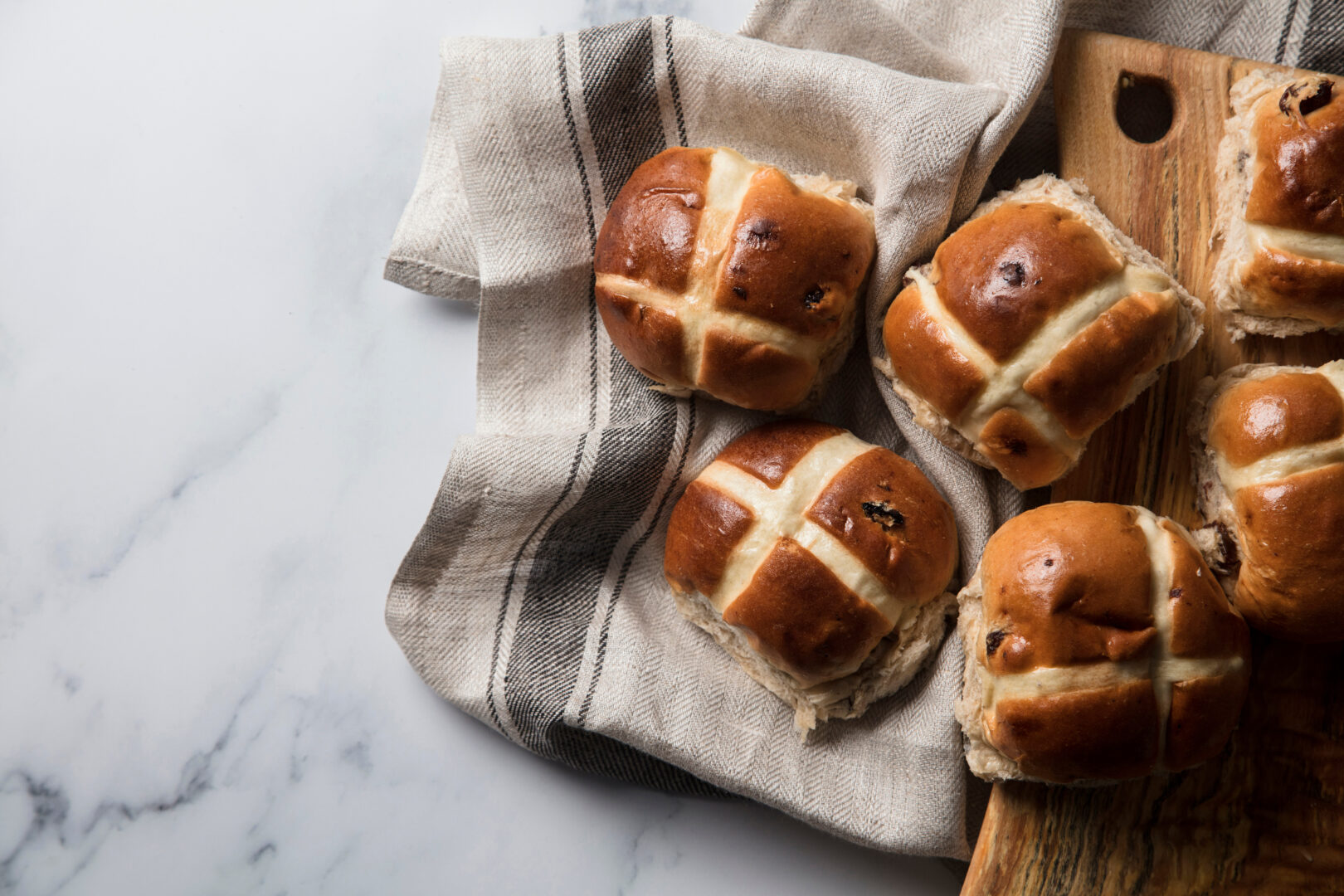
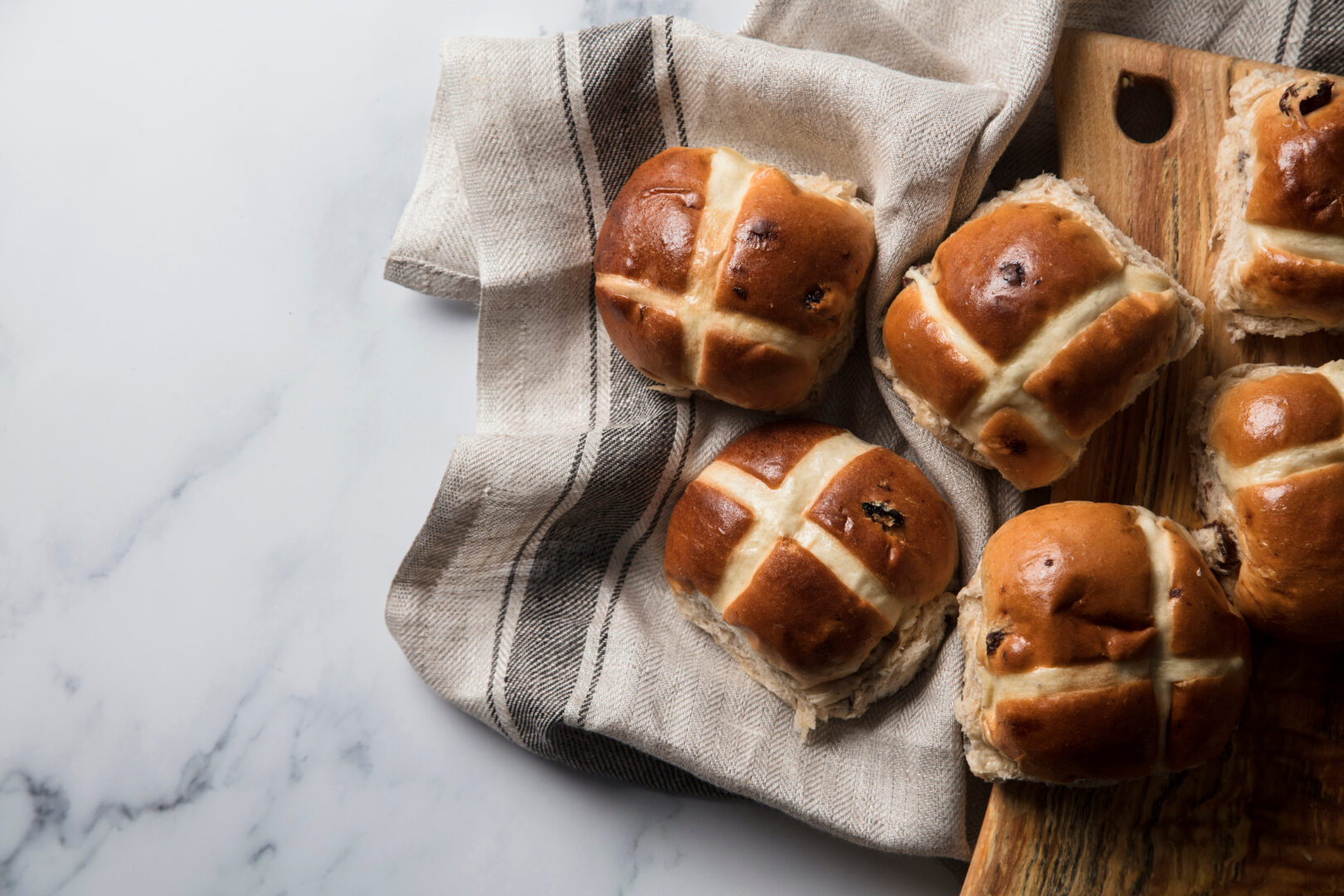
Few baked goods pack history, culture, and pure joy into a single bite quite like the humble hot cross bun. At first glance, it’s just a spiced, fruit-studded bun with a cross on top—but look closer, and you’ll find a pastry that’s basically a time-traveling, globetrotting superstar. From ancient rituals to modern baking experiments, hot cross buns are your edible tour guide to tradition, science and a little bit of magic—with optional butter.
Hot cross buns date back to 7th-century England, though similar spiced breads were probably making pre-Christian pagans very happy during seasonal celebrations. Monks baked them on Good Friday, adding a cross to symbolise the Crucifixion of Jesus, while earlier traditions used marked loaves for protection, luck, and seasonal blessings—basically medieval multi-purpose magic bread. Over time, these buns became Easter staples, blending religion, superstition and ritual into something way more delicious than a history textbook. From simple honey-and-spice loaves to today’s fruit-stuffed, glazed beauties, eating a hot cross bun is like biting into a centuries-old story with a side of cinnamon.
Across the globe, hot cross buns have gone on a world tour of flavour. In the UK, they’re classically spiced with cinnamon and nutmeg. Australians go bigger, sweeter, and shinier, slathering on extra fruit and glaze like a baker who just discovered Instagram filters. In the Caribbean, buns get chewy, tropical, and sweet enough to make you question whether they might secretly double as dessert. Each region keeps the iconic cross, proving that some symbols are too good to mess with—even if the bun’s vibe is radically different.
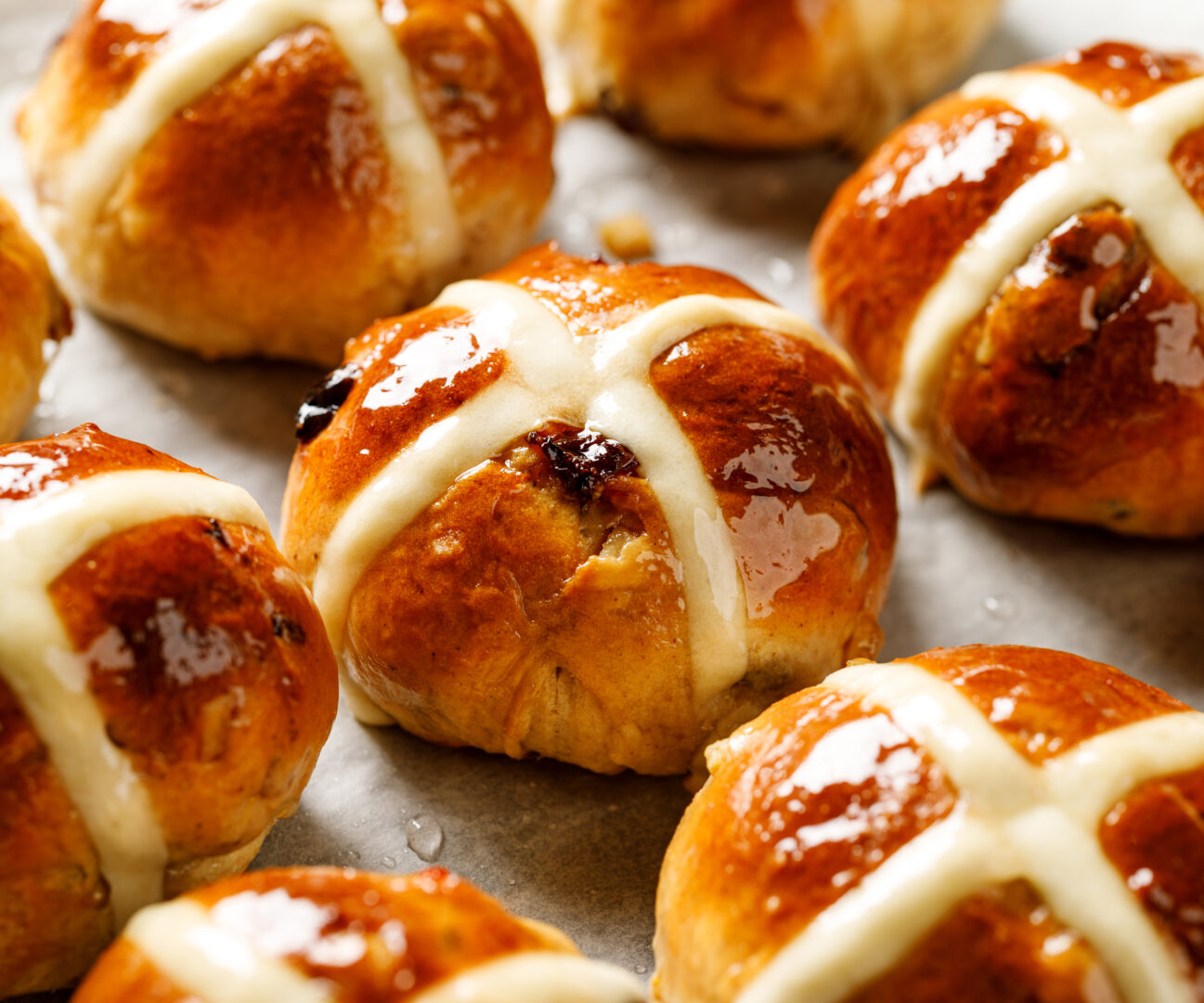
The perfect bun is part art, part science, and part magical chemistry experiment you can eat. Flour type determines chewiness, yeast and rising time control texture, and the glaze—often apricot or sugar syrup—gives that irresistible shiny top that makes people hover over your counter like it’s a museum exhibit. Mess with variables—proofing time, spice ratios, sugar levels—and suddenly you’re conducting edible science experiments that affect aroma, texture, and general happiness levels. Baking hot cross buns is basically chemistry class with zero pop quizzes and unlimited tasting privileges.
Click here for our hot cross bun recipe courtesy of Brasserie Chef de Cuisine, Artemio Lopez.
Hot cross buns are steeped in tradition and superstition. Baking them on Good Friday was believed to protect your house, bring luck, and maybe even stop them from going mouldy—because nothing says divine blessing like a long-lasting bun. Families pass down recipes, toast or butter them on Easter morning, and argue over who got the “best” bun while secretly sneaking extra bites.
And let’s talk bun versatility. Traditionally eaten with butter, these little wonders can also partner with cheese, jam, chocolate, or even savoury spreads if you’re feeling wild. They’re adaptable: french toast, sandwiches, puddings—you name it. Modern twists include vegan, gluten-free, chocolate chip, or citrus versions. These buns aren’t just food—they’re a canvas for culinary chaos, a centuries-old recipe that somehow remains timeless, trendy, and utterly craveable.
Who knew a little spiced bun could carry so much drama? Hot cross buns have survived centuries of superstition, centuries of overzealous bakers, and even the dreaded soggy toaster, all while looking cute with their little crosses.Every bun carries stories from generations past, from medieval kitchens to your own oven. Whether you share them with loved ones or savour one quietly by yourself, they remind us that some traditions are worth keeping—and some buns are just too delicious to resist.